


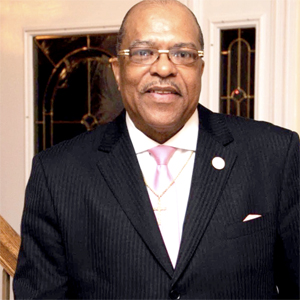
By Rev. Dr. Isaiah Robinson
KEY VERSE: Many people will come and say. “Come, let us go up to the mountain of the LORD, to the temple of the God of Jacob. He will teach us His ways, so that we may walk in His path.” The law will go out from Zion, the word of the Lord from Jerusalem.” (Isaiah 2:3, NIV).
INTRODUCTION: The acknowledgment of commonality in humanity finds the folder for peace. Our lesson focuses on understanding as a means to peace. While we may not understand all the inner workings of other people, cultures, ethnicities, or nations, we can grasp that we are all interconnected. It is only when we recognize that our lives can work together to achieve common goals. It is better to focus on what holds us together than what separates and pulls us apart. The Isaian text points to a time in which people from all over the world will worship together, recognizing God as Lord of all. Acts, on the other hand ,points to the beginning of humanity and acknowledges our common ancestry. All men and women share a common bloodline, a biblical fact corroborated by scientific evidence. Isaiah’s declaration that Israelite supremacy is the hope of and acknowledgement of the blessing that comes when all of God’s people get together. Paul in Acts acknowledges that the Roman Empire was culturally and ethnically diverse, so much so that polytheism was the normal order of the day, and the thought of one God was strange to most people. It is because of this that Paul argues that all people come from the blood. Despite having disparate cultures and ethnicities, all could acknowledge their similar origins and thus sameness in God. Peace comes as we concentrate on what we have in common.
Many are Drawn to the High Holy Place (Isaiah 2:2-3).
Isaiah likely referred to Mount Hermon. Its significance lay and not in height, but in history. There, Abraham placed his son Isaac on the altar, only for God to spare him. This marked the place as holy, not for its geography, but for its testimony of obedience and deliverance. Later, Solomon built the Temple there, a magnificent sanctuary OF WORSHIP. For generations, Jews came to this place to celebrate their faith, until the Babylonian siege destroyed it. Isaiah’s vision pictured many nations streaming to this holy mountain to worship. In this vision, the mountain of the house of the Lord is the sacred place where heaven and earth intersect. Even today, Christians, Muslims, and Jews alike view it as sacred. Christians, however, affirm that the one worthy there is Jesus Christ, the Lord of all. This place represents revelation, refuge, and redemption.
A DIVINE WEAPON EXCHANGE PROGRAM (ISAIAH 2:4).
God revealed to Isaiah a time of complete and lasting peace. No longer will the world be plagued by the death and destruction of war. But one day, Jerusalem will become a city of peace. The prophet declared that swords should become plowshares and spears pruning hooks. This was more than recycling metals; it was a change of hearts. When people learn the ways of God, they choose peace. Nations promote peace when they disarm and invest in life rather than destruction. Weapons destroy, but tools build. Budgets spent on bombs could feed children, build schools, and provide homes. God can redeem what was meant for evil and turn it to good. That is the redemptive beauty of our God.
ACKNOWLEDGEMENT OF THE ALMIGHTY- THE COMMONALITY OF HUMANITY (ACTS 17: 26-28).
After enduring imprisonment in Philippi, Paul and Silas traveled through Thessalonica and Brea before arriving in Athens. Athens was a cultural and intellectual hub of the Greco-Roman world. Paul had arrived in
The intellectual capital of antiquity, a city renowned for its philosophy, arts, and architecture. While awaiting Silas and Timothy, Paul explored the city and was deeply troubled by its rampant idolatry. Though aware of Athens pagan reputation, the overwhelming presence of idols provoked righteous indignation in Paul, who was deeply grounded in the truths of the Old Testament. On Mars Hill, Paul addressed Epicureans, who believed life was random, and Stoics, who argued for order and design. Paul remained focused on his mission. His approach was contextual, thoughtful, and unprejudiced. Paul proclaimed a God who created the world with purpose and love. Paul also affirmed that God created all nations from one family. This teaching cut down human attempts to divide people into categories of “us” and “them.” Tracing our origins back to Adam and Eve reveals our common bond. Humanity is united not only by blood but also by God’s ongoing purpose. Paul affirms that God’s peaceable wisdom is made known to us through Jesus Christ.
God’s path is literally the road that leads to peace, love, and well-being.