

By Robyn Sidersky The Virginian-Pilot (TNS) and Tribune Media Services
When Rachel Hawley walked into the old Macy’s at Military Square mall to get her first COVID-19 vaccine shot, there were lots of wide eyes.
She was 39 weeks pregnant.
Hawley was eligible to get the shots, not only because she has an autoimmune disorder, but because she was expecting. So the 38-year-old Norfolk mother signed up as soon as she could after discussing it with her doctor.
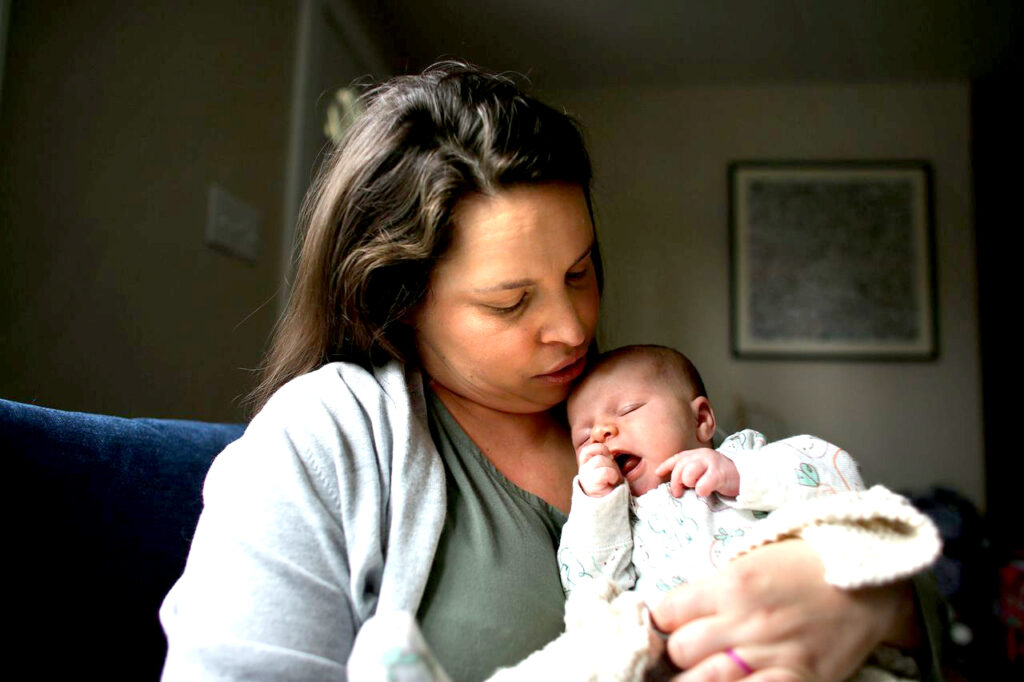
Three days after her first shot, she gave birth to her second daughter, Quinn, and last week, got her second shot.
Now, Quinn, nearly a month old, may be benefiting from the vaccine, too. Early results from studies around the world are showing that babies may receive COVID-19 antibodies in utero or through breast milk from vaccinated moms.
A baby born in South Florida three weeks after her mother received the Moderna vaccine was born with the antibodies, two pediatricians learned when they tested the mother’s cord blood, according to a story in The Miami Herald. Another baby was born with the antibodies in Colorado in February, a few weeks after her mom got the vaccine.
Several organizations, including the American Academy of Pediatrics, the American Academy of Breastfeeding Medicine, The American College of Obstetricians and Gynecologists and others are supporting vaccination for particularly high-risk pregnant and lactating women, Brenner said.
The Centers for Disease Control and Prevention Advisory Committee on Immunization Practices reported that with the exception of smallpox and yellow fever, vaccines given to lactating mothers have not affected the safety of their breastfeeding.
Hawley is breastfeeding Quinn and hoping her baby will get the antibodies as protection.
The early results are giving experts in the field hope.
Dr. Michelle Brenner, the medical director of The King’s Daughters Milk Bank at Children’s Hospital of The King’s Daughters has been looking at similar research around the world, including from a group in Norway, where scientists studied antibodies in breast milk samples.
“If a mom is vaccinated toward the end of her pregnancy, she is providing immediate protection to that unborn baby, as well as when the infant is born, so the risk of transmission to the infant by someone else in the nursery, or by a family member would be decreased,” said Brenner, also a pediatrician and professor at Eastern Virginia Medical School.
“So especially moms who are at high risk, it’s good for them to consider getting vaccinated during pregnancy.”
Dr. Margarita de Veciana, a professor of obstetrics and gynecology at Eastern Virginia Medical School, likens it to when a woman gets a flu vaccine or a TDAP vaccine in pregnancy, and their body mounts an antibody defense against the diseases.
After birth or if they’re breastfeeding their baby, they’re passing along these antibodies. It’s just as if they’ve gotten any other vaccine in pregnancy, so it makes a lot of sense, she said.