

by SPEAKIN’ OUT NEWS with reporting from WWNO, WBHM, KFF Health News, and the Gulf States Newsroom.

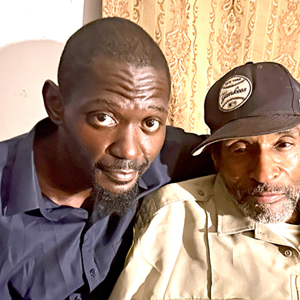
BIRMINGHAM, Ala. — In a modest apartment not far from downtown, Walter Smith and his partner, David Austin, live on a razor’s edge. Both are living with HIV, and federal and nonprofit programs help keep their home, their care, and their lives from unraveling. But now, sweeping funding cuts under the Department of Government Efficiency (DOGE)and proposed federal rollbacks threaten to dismantle the very safety net they depend on.
What the Numbers Now Say
• According to the CDC’s 2025 Alabama HIV State Profile, Alabama received $8.1 million in federal funding for HIV prevention and care in FY 2024, including $3.1 million under the Ending the HIV Epidemic (EHE)initiative.
• State health data show that in the first quarter of 2025, Alabama is tracking newly diagnosed HIV cases and cumulative prevalence, highlighting that the epidemic remains active and ongoing.
• On the national stage, the House FY2026 appropriations proposal would cut $1.8 billion from the CDC’s prevention, eliminate the EHE initiative, and slash $525 million from the Ryan White HIV/AIDS Program. That puts core care, treatment, and prevention funding in jeopardy.
• Also, KFF Health News reports that the CDC currently provides about 91% of all federal funding for U.S. HIV prevention. Eliminating or scaling back that funding would severely weaken prevention capacity across states.
• Health advocates warn these cuts would reverse decades of progress. AIDS United argues that cuts to housing and care threaten to increase new HIV transmissions and disrupt treatment for those already living with HIV.
These numbers don’t just fill a chart — they reflect real lives, fragile hope, and looming danger.
Cuts That Could Kill
Alabama’s HIV care system already operates on a lean margin. Clinics like Birmingham’s 1917 Clinic and nonprofits like AIDS Alabama rely heavily on federal support. Cuts to EHE, Ryan White programs, and CDC prevention funds would rip away the infrastructure many clients rely on every day.
In interviews with WWNO and WBHM, medical staff report preparing for conversations they fear having: telling patients they don’t know how long their treatment will last, or whether housing support will disappear.
Dr. Ellen Eaton, an infectious disease physician at 1917 Clinic, says:
“Patients ask me, ‘What happens if my meds stop coming?’ And I have to tell them the truth — I don’t know.
Meanwhile, Kathie Hiers, CEO of AIDS Alabama, stresses that housing is essential to treatment: without a stable shelter, patients often lose adherence to medication and face a higher risk of illness and transmission.
When Policy Hits Home
Cuts to HIV funding don’t just impact clinics — they ripple through every aspect of a person’s life. Housing support (via HOPWA and other programs), outreach, mental health care, and transportation assistance — all of these complementary services make treatment feasible for many in Alabama.
With the proposed federal rollback, many of those supports could vanish overnight. The result? More interruptions in care, higher viral loads, and renewed spread of the virus.
Health advocacy groups are sounding the alarm: the House’s proposed funding bill would dismantle HIV prevention and slash critical care programs.
As one joint statement from ADAP Advocacy and CANN put it:
“Critical HIV prevention programs face potential elimination.”
The Broader Crisis
Alabama already faces a heavy burden from HIV. The state consistently ranks among those with high new-diagnosis rates, especially in rural and Black communities. State health data confirm that prevalence remains high.
Nationally, the CDC reports that in 2023, over 39,000 people were diagnosed with HIV in the U.S., and the Southern region accounted for 51% of those diagnoses.
Experts argue that dismantling prevention and care funding now would reverse years of progress.
Lives in the Balance
Back in that Birmingham apartment, Walter and David understand what’s at stake. “They say it’s about efficiency,” Walter said. “But how efficient is it to let people die?”
Across Alabama, HIV advocates, clinic staff, and patients are mobilizing to resist these cuts. They argue this is not just a health issue but a moral one. As Hiers puts it:
“When you cut care, people die. When you cut housing, people end up back on the streets — and the virus spreads.”
Many fear that with these deep cuts, hundreds could lose access to housing and medication within just months.
As debates rage in D.C., the HIV community in Alabama waits — hoping that their stories, statistics, and lives will compel enough lawmakers to reconsider.