


SPEAKIN’ OUT NEWS
(City of Huntsville Screenshot)
(City of Huntsville Screenshot)
HUNTSVILLE — A tense public-comments period at the Sept. 25 City Council meeting laid bare community frustration over speech limits tied to pending litigation, alleged harassment of Black-owned businesses, and long-standing concerns about investment in North Huntsville.
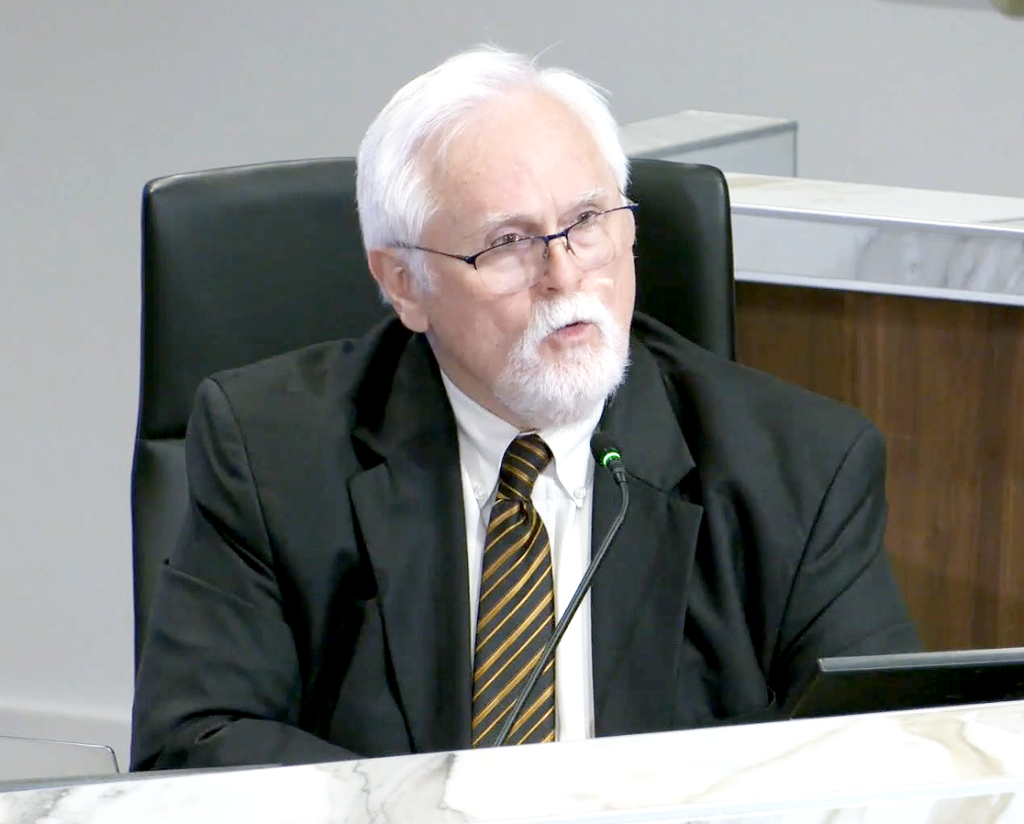
City Attorney Trey Riley repeatedly advised the council that its rules bar discussion of filed claims or lawsuits, warning members not to take comments related to the 708 Bar & Grille case now in circuit court. Audience pushback grew as Council President John Meredith noted that a comment exchange is also prohibited under council rules. A motion to suspend the rules to allow discussion failed, cutting off remarks tied to the lawsuit.
“Create a space for us”
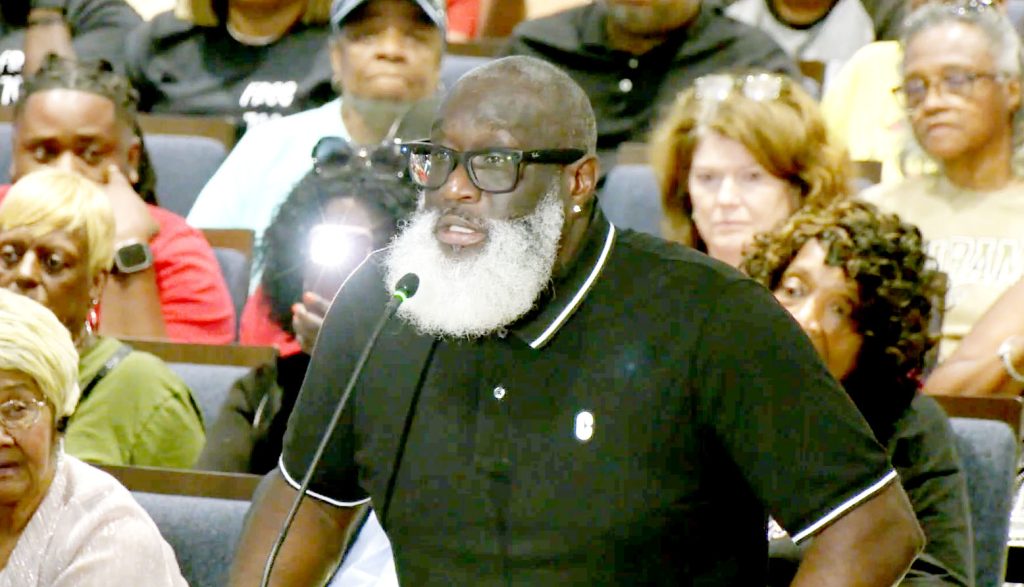
Malcolm Gopher, co-owner of 708 Bar & Grille, said he would avoid the specifics of the case but urged the city to ensure equitable inclusion of Black-owned businesses in Huntsville’s growth, noting the city has eight entertainment districts but “not one of them have Black business.”
“For us to be included in some of these developments, you’ve got to create a space for us,” Gopher said. “Right now, it feels like we’re ostracized or kicked out of other spaces. That’s not equity — that’s exclusion.”
Gopher said he has personally met with city leaders, including Meredith, to seek help “to no avail.” He also described ongoing police harassment, saying officers have followed him across state lines, searched his vehicle without finding anything, and continued to target him because of his past.
“I’m a Black man who went to jail and changed his life, and they can’t accept it,” he said. “I’ve got receipts of the harassment, and all I’m asking is to be left alone and given a fair chance.”
“We feel discriminated against”
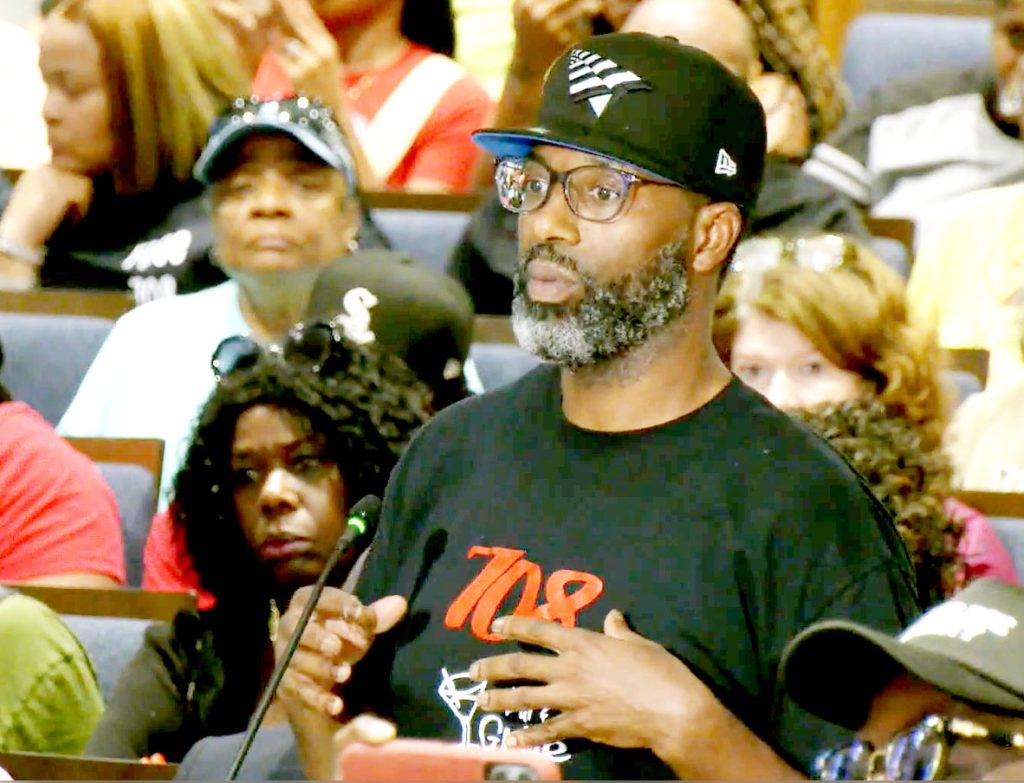
Julius Jennings, a District 1 resident, took the podium next. Although he was not permitted to speak directly on the 708 case, Jennings channeled his remarks into a critique of how North Huntsville has been neglected compared to other areas of the city.
“Our area has been left behind for years,” Jennings said. “When we look at University Drive or downtown, we see investment and growth. But north of the Parkway? No new restaurants, no sit-down dining, no real development. We shouldn’t have to drive across town just to enjoy a decent meal.”
Jennings said businesses like 708 Bar & Grille serve as community staples — places to socialize, watch games, and keep dollars circulating locally. He accused the city of double standards, pointing to shootings at downtown establishments that did not result in closures.
“Twin Peaks had a shooting not long ago, and they’re still open,” he said. “Downtown clubs get city support even when trouble happens. But when it comes to us, our businesses get padlocked. That’s discrimination, plain and simple.”
He added that harassment extends beyond businesses to patrons themselves, who often face stricter dress code enforcement and police presence in majority-Black establishments.
“We can’t even go into certain clubs without being harassed, while others across town let things slide. That’s a double standard we’re tired of living under,” he said.
“Why did it take 45 minutes?” — Paul Proctor’s story
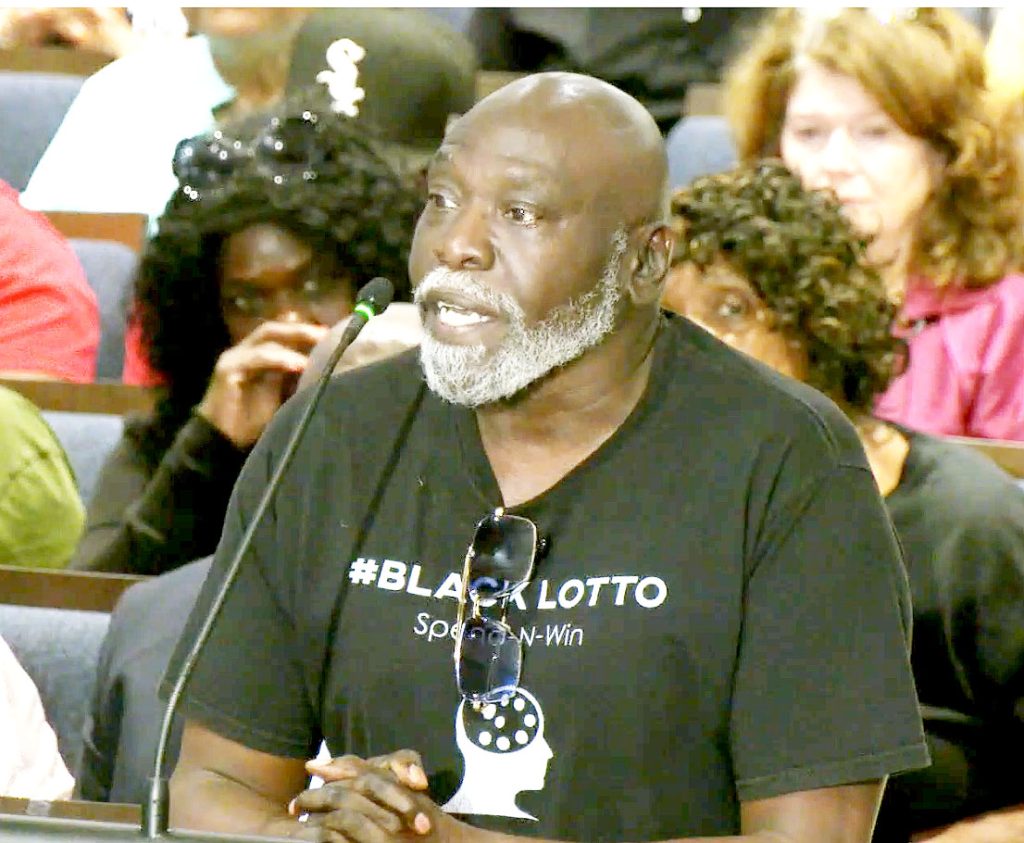
Peter Proctor Jr. expressed anger that residents could not speak publicly about the 708 case and shifted to a personal tragedy: the 2016 death of his twin brother, Paul Proctor. He alleged that emergency responders took more than 45 minutes to arrive, despite being stationed nearby, and questioned why no city officials had ever explained the delay.
“The first thing they said to me when they finally came was that they were going to call the police — when all I wanted to do was knock that door down to save my brother’s life,” he recalled.
Proctor said Paul had been a public servant in Huntsville, and yet his death “was thrown under the rug.” He urged council members to confront systemic inequities and acknowledge that the Black community’s safety and human rights must matter as much as economic growth.
Rules vs. representation
Throughout the exchange, Meredith cautioned the audience to settle down, emphasizing that rules prohibit dialogue with speakers and constrain comments on matters in court. Riley said discussing the 708 case would be inappropriate while it is under judicial consideration.
Still, both Council President John Meredith and District 1 Councilwoman Michelle Watkins spoke up for citizens’ right to be heard. Meredith made a motion to suspend the rules to allow residents not named in the lawsuit to comment on the 708 matter. Watkins, who represents the district where 708 is located, supported the motion. However, the measure failed when the rest of the council voted against it.
Meredith closed the discussion by acknowledging residents’ frustration and invited them to reach out to him privatelyafter the meeting to ensure their concerns would not go unheard.
Background: The 708 Lawsuit
The city filed suit against 708 Bar & Grille in May 2024, seeking to declare the north Huntsville establishment a public nuisance after a series of violent incidents.
Cited incidents include:
• Oct. 2022: Liquor license suspended for 90 days due to repeated disturbances.
• May 2023: A woman was run over multiple times in the parking lot during a domestic violence incident.
• May 2024: Five people were shot on the patio (which the city said was not legally permitted as a seating area).
• Aug. 2024: Multiple vehicles were shot on the property.
• March 2025: Several civilians were shot after a suspect sped through the area at 120 mph.
The city claims the owners failed to prevent or deter violence and violated noise ordinances. In response, Madison County Circuit Judge Ruth Ann Hall issued a preliminary injunction on Sept. 17, 2025, ordering the business padlocked. The owners, led by co-owner Malcolm Gopher, deny the allegations, arguing they have been unfairly targeted, were not properly notified of violations, and have requested but not received support from the police. They are fighting to have the injunction reconsidered, saying the closure has caused serious financial hardship.
The throughline: inclusion and investment
While litigation limits dominated the night, speakers converged on a broader theme: North Huntsville wants in—on development, entertainment, and decision-making. Residents urged the city to match its economic momentum with deliberate investment north of the Parkway, and to ensure Black-owned venues have a viable seat in Huntsville’s expanding nightlife and commercial map.